


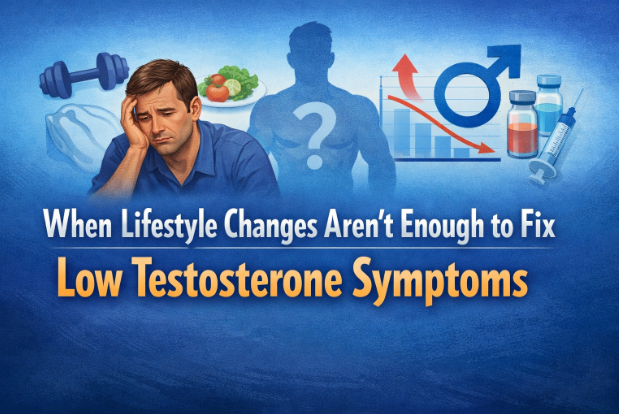
Hitting a wall with natural fixes
Diet, exercise and good sleep are powerful tools for hormone health. But sometimes they aren’t enough. Low testosterone can cause ongoing fatigue, depressed mood and loss of muscle mass even in men who eat well and exercise. The Cleveland Clinic notes that treatment focuses on relieving symptoms rather than reaching a particular number. Many men see improvements in sex drive, mood and energy with hormone therapy.
Example: Eli’s experience
Eli, 46, cleaned up his diet, started weight training and practiced meditation. He lost some weight but still felt tired and unmotivated. Comprehensive testing showed low free testosterone and high SHBG. After discussing risks and benefits, he chose testosterone therapy under medical supervision. Within months, his energy, mood and workout recovery improved.
Comparing options
Conventional medicine may jump straight to hormone therapy, sometimes without addressing lifestyle factors. Functional medicine starts with diet, sleep and stress management and only moves to therapy when these interventions aren’t enough. When therapy is used, functional practitioners monitor blood tests and work with a more comprehensive approach to testosterone replacement therapy to tailor dosage and form. Addressing root causes and using therapy judiciously can produce lasting benefits.
Key point
If lifestyle changes haven’t fixed your low testosterone symptoms, a carefully monitored hormone therapy plan may help. The goal is to relieve symptoms, improve quality of life and continue healthy habits.
